Laptop Buying Guide Step by Step: Your Must-Have Easy Solution
Buying a new laptop can feel overwhelming, especially with the vast variety of models, specifications, and prices available on the market today. Whether you’re a student, professional, gamer, or casual user, knowing exactly what to look for can save you money, time, and frustration. This laptop buying guide step by step provides a straightforward solution to help you make an informed decision effortlessly.
Why You Need a Laptop Buying Guide Step by Step
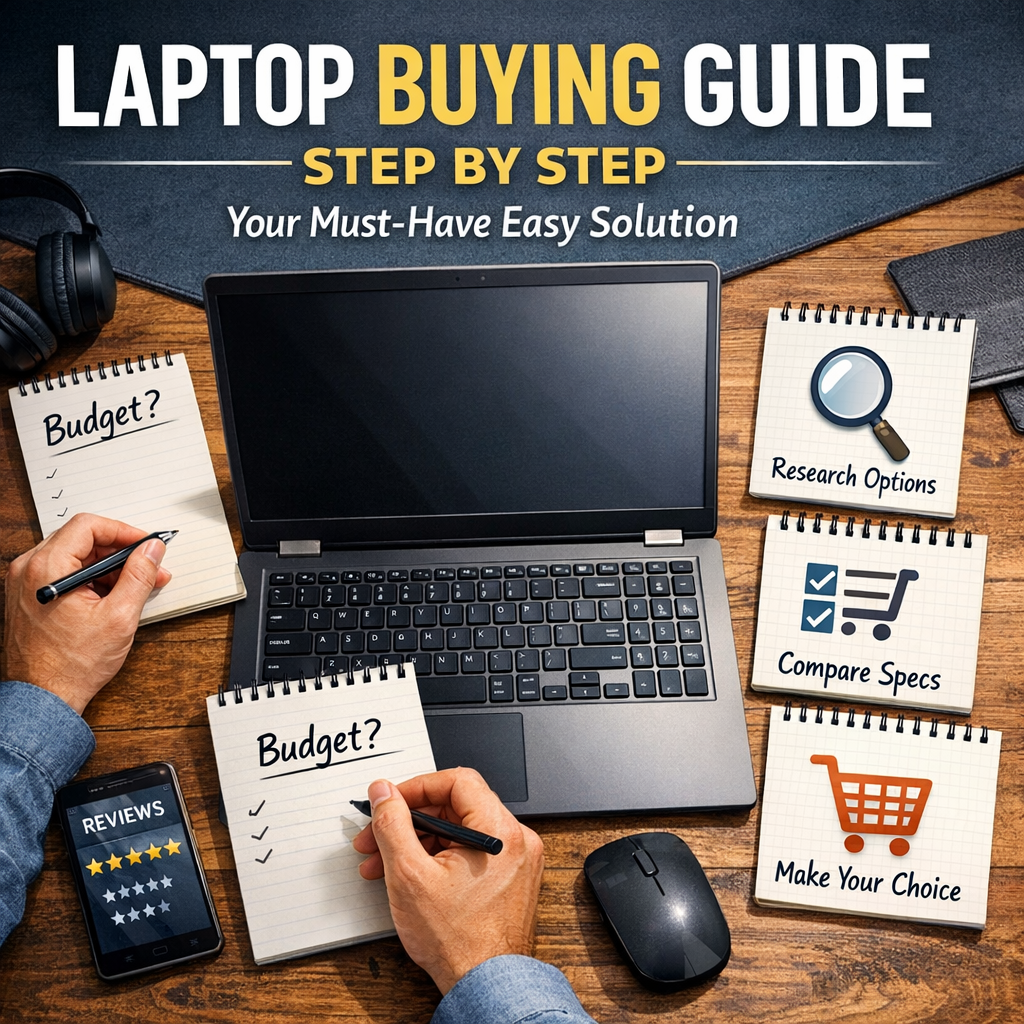
Choosing the right laptop is more than just picking the one with the latest processor or sleek design. It requires understanding your unique needs, performance requirements, and budget constraints. Without proper guidance, you might end up with a device that doesn’t match your expectations or holds you back in productivity.
This guide simplifies the process, breaking it down into clear stages to ensure you end up with the best laptop for your lifestyle without unnecessary stress.
Step 1: Identify Your Primary Use Case
Every laptop buyer should start by clarifying the main purpose of the device. Different uses demand different features:
– Casual Use: Browsing the web, streaming videos, social media, and light productivity work.
– Business and Professional Use: Running office applications, video conferencing, and managing spreadsheets.
– Creative Work: Photo editing, graphic design, video production, and 3D rendering.
– Gaming: Playing modern games with high graphics and smooth frame rates.
– Portability Needs: Frequent travel requires lightweight and long battery life.
Knowing your primary use helps narrow down your options and focus on specifications that truly matter.
Step 2: Set Your Budget
Once you know your needs, it’s essential to set a realistic budget. Laptops come in all price ranges—from budget-friendly under $400 to premium models costing over $2,000.
– Budget Laptops ($300-$600): Best for basic tasks and light usage.
– Mid-Range Laptops ($600-$1,200): Suitable for most professional and multimedia tasks.
– High-End Laptops ($1,200+): Designed for power users, creatives, and gamers.
Deciding your budget upfront helps you avoid falling for unnecessary upgrades and keeps your search efficient.
Step 3: Choose the Right Processor (CPU)
The processor is the brain of your laptop, so choose one that aligns with your workload:
– Intel Core i3/i5 or AMD Ryzen 3/5: Ideal for everyday use, office work, and moderate multitasking.
– Intel Core i7/i9 or AMD Ryzen 7/9: Perfect for intensive tasks such as video editing, programming, and gaming.
– Apple M1/M2 Chips: Excellent performance and efficiency found in newer MacBooks.
Understanding processor capabilities helps ensure smooth performance without overspending.
Step 4: Decide on RAM and Storage
RAM and storage impact speed and capacity:
– RAM: Minimum 8GB for general use; 16GB or more for gaming, multitasking, and creative software.
– Storage: SSD (Solid State Drive) is preferable to HDD due to faster speed and reliability.
– 256GB SSD is sufficient for most users.
– Consider 512GB or 1TB if you handle large files or want ample space.
Avoid laptops with low RAM or slow HDDs, as they often struggle with multitasking and boot times.
Step 5: Screen Size and Display
Your screen choice affects portability and viewing comfort:
– 13-14 inches: Highly portable, ideal for students and frequent travelers.
– 15-16 inches: A good balance of screen real estate and portability.
– 17 inches and above: Best for gaming and multimedia but less portable.
Additionally, aim for at least a Full HD (1920×1080) resolution for sharp visuals. For creative work, consider laptops with color-accurate displays.
Step 6: Battery Life and Portability
If you work on the go, battery life is crucial. Check manufacturer specifications and reviews for real-world battery performance. Lightweight aluminum or magnesium chassis often contribute to easy portability without compromising durability.
Step 7: Connectivity and Ports
Make sure the laptop has the ports you need: USB-A, USB-C, HDMI, SD card reader, or headphone jacks. Thunderbolt ports offer faster data transfer and additional display options but are more common on high-end models.
Step 8: Operating System Preferences
Your choice of operating system affects software availability and user experience:
– Windows: Versatile and widely used, compatible with most software.
– macOS: Preferred for creative professionals and users invested in the Apple ecosystem.
– Chrome OS: Simplified, secure, and budget-friendly for web-centric users.
Step 9: Read Reviews and Compare Models
After narrowing down your options, check online reviews, user feedback, and professional opinions. Comparison tools can also help highlight the pros and cons side-by-side.
Step 10: Consider Warranty and Support
Finally, ensure your purchase comes with a decent warranty and reliable customer support. Some manufacturers offer extended warranties or accidental damage protection, which might be worth considering for expensive devices.
—
Conclusion
Following this laptop buying guide step by step takes the guesswork out of finding the perfect laptop. By understanding your needs, setting a budget, and focusing on key specifications such as processor, RAM, display, and portability, you can confidently choose a laptop tailored to your lifestyle and work demands. Remember, the best laptop is the one that fits you—not the one with the most specs on paper. Happy hunting!