Wearable Technology Comparison: Ultimate Guide to the Best Devices
Wearable technology has become an integral part of our daily lives, blending seamlessly with fashion, fitness, and productivity. From smartwatches that track your heart rate to fitness bands that monitor your sleep patterns, the choices are vast and often overwhelming. In this wearable technology comparison, we will break down the best devices available today, helping you understand their features, pros, and cons so you can make an informed decision tailored to your needs.
Understanding Wearable Technology
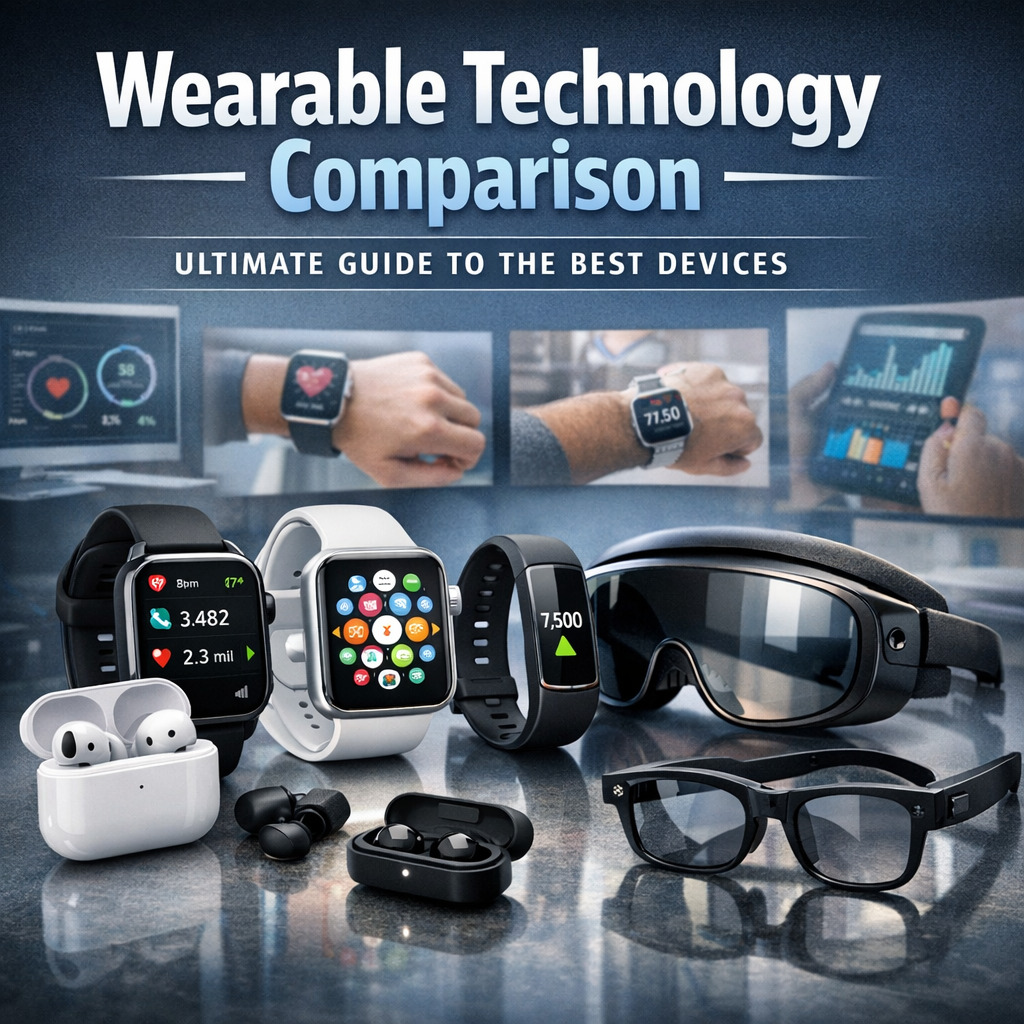
Before diving into the comparison, it’s essential to understand what wearable technology entails. These devices are electronic gadgets you can wear on your body, usually designed to interact with the internet or your smartphone. Their primary purposes include monitoring health metrics, managing notifications, enhancing communication, and improving productivity.
Wearables have evolved rapidly, offering functionalities such as GPS tracking, biometric sensors, music streaming, and even ECG monitoring, all wrapped up in sleek, lightweight designs.
Top Categories in Wearable Technology Comparison
When evaluating wearables, it’s helpful to categorize them by their primary function:
– Smartwatches: Multifunctional devices that combine fitness tracking, notifications, apps, and health monitoring.
– Fitness Trackers: Focused on health and activity monitoring such as steps, calories, heart rate, and sleep.
– Smart Glasses: Augmented reality (AR) devices providing hands-free access to information.
– Wearable Cameras: Compact devices capturing first-person perspectives.
– Wearable Headphones: Audio devices that offer features like noise cancellation and voice assistance.
For this guide, we’ll focus predominantly on smartwatches and fitness trackers, as these are the most popular and widely used forms of wearable technology.
Wearable Technology Comparison: Smartwatches vs. Fitness Trackers
Smartwatches: More Than Just Timekeepers
Smartwatches, such as the Apple Watch Series 9 and Samsung Galaxy Watch 6, offer a broad spectrum of features. Their benefits include:
– Comprehensive Health Monitoring: ECG, blood oxygen, sleep analysis, and even fall detection.
– Connectivity: Direct access to calls, messages, and notifications without needing your phone.
– App Ecosystem: From fitness apps to music players, smartwatches serve as mini-computers on the wrist.
– Customization: Interchangeable bands and customizable watch faces.
However, smartwatches tend to have shorter battery life (often 18-48 hours) and higher price points. They also require a compatible smartphone to unlock their full potential.
Fitness Trackers: Focused and Efficient
Fitness trackers like the Fitbit Charge 6 and Garmin Vivosmart 5 prioritize health metrics over connectivity. Their advantages include:
– Extended Battery Life: Typically ranging from 5 days to over a week.
– Lightweight and Discreet: Slim designs focused on comfort during workouts and sleep.
– Detailed Fitness Insights: Advanced statistics on workouts, stress levels, and heart rate variability.
– Affordability: Usually cheaper than smartwatches.
The trade-off is limited app support and fewer smart features, with most trackers solely designed for health monitoring.
Leading Wearable Devices in 2024: A Detailed Comparison
Apple Watch Series 9
Widely regarded as the gold standard in smartwatches, the Apple Watch Series 9 combines elegance with powerful health features. It includes continuous heart rate tracking, ECG, blood oxygen monitoring, and a new S9 chip for enhanced performance. Integration with iOS devices is seamless, making it ideal for iPhone users. However, battery life still hovers around 18 hours, requiring daily charging.
Fitbit Charge 6
The Fitbit Charge 6 remains a favorite in the fitness tracker category. It offers rich health data like SpO2 monitoring, step counting, sleep stages analysis, and guided workouts. With up to 7 days of battery life and compatibility with both iOS and Android, it’s an excellent choice for users focused on wellness without the complexity of a full smartwatch.
Garmin Venu 3
Garmin excels with its sports and outdoor-centric wearables, and the Venu 3 model is no exception. It combines AMOLED display quality with robust fitness tracking, including animated workouts and stress tracking. Its battery life is impressive, lasting up to 8 days in smartwatch mode. Ideal for athletes and outdoor enthusiasts, the Garmin Venu 3 is versatile and rugged.
Samsung Galaxy Watch 6
Samsung Galaxy Watch 6 offers a compelling alternative for Android users. Its Super AMOLED display is vibrant, and the device supports comprehensive health tracking, including ECG and blood pressure monitoring (where available). Battery life averages around 40 hours, balancing features with endurance.
How to Choose the Best Wearable Device for You
When deciding on the right wearable device, consider these factors:
– Purpose: Is your focus on fitness tracking, health monitoring, or staying connected?
– Ecosystem Compatibility: Apple Watch pairs best with iPhones, while Samsung and Garmin cater to Android users.
– Battery Life: If you dislike daily charging, opt for fitness trackers or smartwatches with longer battery life.
– Budget: Prices vary widely, from budget-friendly trackers to premium smartwatches.
– Design and Comfort: Since you’ll wear these devices all day, comfort and personal style matter.
Future Trends in Wearable Technology
Wearable technology continues to evolve with innovations like flexible displays, AI-powered health predictions, and advanced biometric sensors. The integration of AR into wearables, improved battery technologies, and more personalized health insights are shaping the next generation of devices.
Conclusion
This wearable technology comparison offers a clear perspective on the current leading devices, helping you navigate the crowded market. Whether you prioritize comprehensive smart features, health tracking accuracy, or battery life, there is a wearable device suited for your lifestyle. By understanding the strengths and limitations of smartwatches and fitness trackers, you can confidently choose the technology that empowers you to lead a healthier, more connected life.